10 Korean Foods for Summer
Special Seasonal Edition

10 Korean Foods for Summer

Summer foods in Korea care for the body in two ways: by restoring energy with heat or cooling the body with refreshing flavors.

💡 Recommended Affiliate Partner (Premium K-Food Meal-kits & Ingredients)

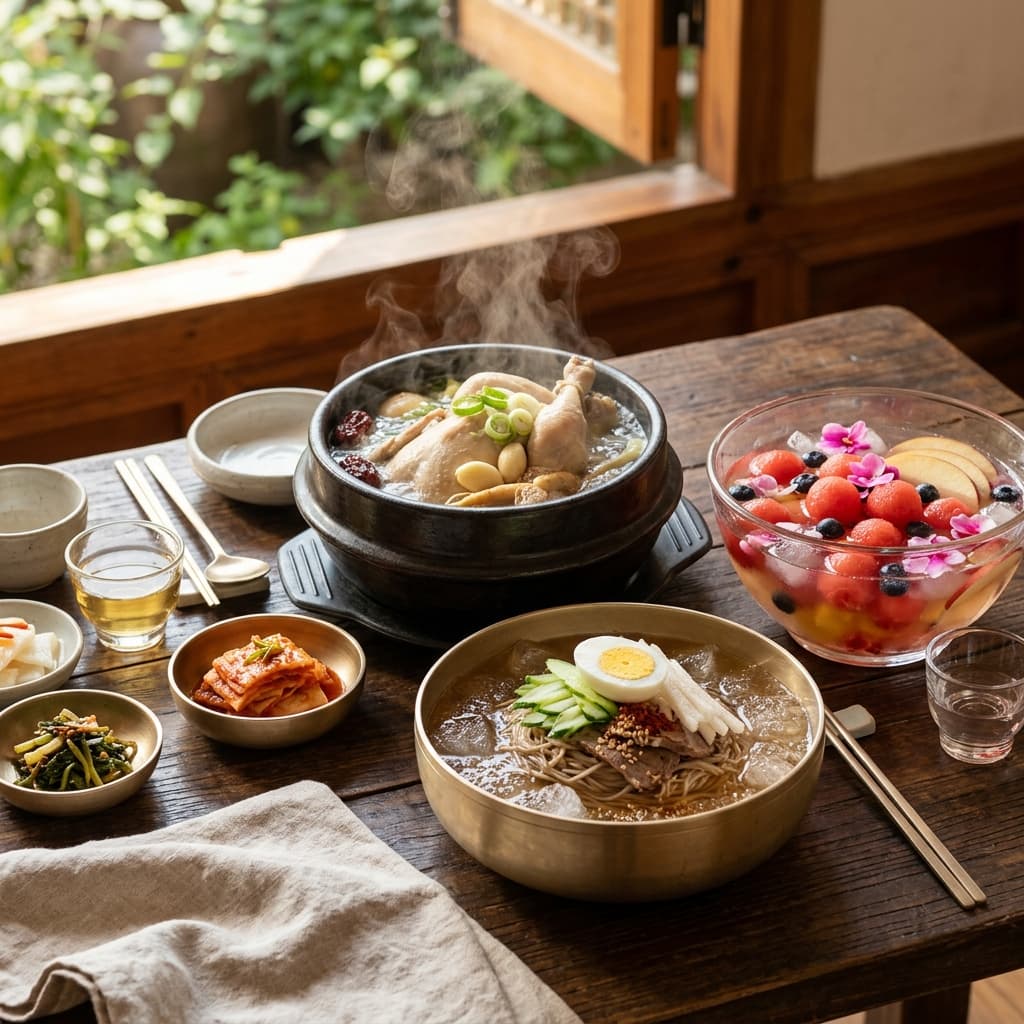
Summer Korean food is not limited to cold dishes. It includes the wisdom of iyeolchiyeol—restoring strength with hot dishes like samgyetang—as well as the cooling logic of dishes such as naengmyeon and kongguksu.

About This Curation

This curation introduces ten representative summer foods: samgyetang, yukgaejang, chogyetang, imjasutang, naengmyeon, patbingsu, kongguksu, oi-naengguk, hwachae, and misutgaru.

Diverse Moods and Contexts

Each dish carries a different seasonal mood, ingredient structure, serving temperature, and cultural role. Some are nourishing meals, while others are light and refreshing ways to recover from heat.

01

Samgyetang(Ginseng Chicken Soup)

Fighting Fire with Fire (Hot Nourishment)Fighting Fire with Fire · Nourishing Soup

A whole young chicken stuffed with ginseng, jujube, garlic, and glutinous rice, simmered to perfection.

Originating as Gyesamtang, it evolved into Samgyetang as ginseng became widely cultivated, restoring warmth to the body during the hottest days of summer.

Health Cautions:Ginseng saponins may interact with anticoagulant drugs. Also, as a high-calorie dish, portion control is recommended for those managing energy intake.
📖Read More
👇

Detailed description coming soon.

02

Yukgaejang(Spicy Beef Soup)

Fighting Fire with Fire (Spicy Vitality)Fighting Fire with Fire · Spicy Stew

A spicy beef soup simmered with shredded beef, bracken fern, green onions, and red pepper flakes.

Developed as a beef alternative to dog meat soup (Gaejangguk) for royal and noble families, combining the detoxifying benefits of green onions with nutritious beef.

Health Cautions:High in sodium and spicy seasoning that may irritate the stomach. Hypertension patients or those with gastritis should consume the broth in moderation.
📖Read More
👇

Detailed description coming soon.

03

Chogyetang(Chilled Vinegar Chicken Soup)

Fighting Cold with Cold (Chilled Nourishment)Fighting Cold with Cold · Chilled Restoration

A chilled chicken soup flavored with vinegar and mustard, topped with shredded chicken and crisp vegetables.

Originally an aristocratic winter delicacy in the Joseon dynasty, it has been modernized into a premium summer refreshment to cool down the body.

Health Cautions:The high acidity of vinegar may stimulate an empty stomach. Since it is served cold, those with sensitive digestion should consume it slowly.
📖Read More
👇

Detailed description coming soon.

04

Imjasutang(Cold Sesame Chicken Soup)

Fighting Cold with Cold (Savory Tradition)Fighting Cold with Cold · Royal Chilled Nourishment

A royal summer soup featuring shredded chicken in a chilled, creamy, and savory toasted sesame seed broth.

Praised as a masterpiece of Joseon court cuisine, it showcases the elegance of royal dining by combining rich sesame (Imja) and pine nut nutrition with chicken protein.

Health Cautions:Avoid if you have sesame or pine nut allergies. High in plant fats, overconsumption may cause mild indigestion for those with weaker stomachs.
📖Read More
👇

Detailed description coming soon.

05

Naengmyeon(Chilled Buckwheat Noodles)

Representative Summer NoodlesFighting Cold with Cold · Buckwheat Noodles

Naengmyeon was originally a winter dish made of buckwheat in northern Korea, but today it is the ultimate summer noodle culture. It includes diverse lineages like Pyongyan's mild water noodles, Hamhung's spicy mixed noodles, Jinju noodles, and Busan's Milmyeon born from refugee history, embodying Korean seasonality and locality.

Naengmyeon is a symbol of Korean summer food, containing refreshing taste, memories of displaced people, local food cultures, and the tradition of 'fighting cold with cold'.

Health Cautions:Be cautious of buckwheat allergy, high-sodium broth, and spicy seasonings.
📖Read More
👇

Detailed description coming soon.

06

Patbingsu(Sweet Red Bean Shaved Ice)

National Summer DessertTraditional Dessert · Shaved Ice

Patbingsu is a representative Korean summer dessert formed by the combination of Joseon Dynasty ice storage culture and modern ice-making technology. Served with red beans, rice cakes, and condensed milk over shaved ice, it symbolizes the democratization of ice from a royal privilege into a popular seasonal treat.

Patbingsu is a hybrid dessert blending traditional ingredients with modern technology, serving as an iconic sweet treat of Korean summer pop culture.

Health Cautions:Be mindful of sugar, calories, and dairy/condensed milk intake.
📖Read More
👇

Detailed description coming soon.

07

Kongguksu(Noodles in Cold Soybean Soup)

Fighting Cold with Cold (Plant Protein)Fighting Cold with Cold · Plant Protein

Wheat noodles served in a creamy, chilled broth of freshly ground boiled soybeans, topped with cucumber and tomato.

First recorded in the 19th-century cookbook Siuijeonseo. It reflects the wisdom of commoners who relied on soybeans as 'meat from the field' to replenish protein and hydration.

Health Cautions:Avoid if you have a soy allergy. Adding too much sugar (common in some regions) can cause blood sugar spikes; seasoning with salt is recommended.
📖Read More
👇

Detailed description coming soon.

08

Oi-naengguk(Chilled Cucumber Soup)

Fighting Cold with Cold (Hydrating & Crisp)Hydrating Cold Soup · Daily Dish

A refreshing side dish of thinly sliced cucumbers in a chilled vinegar-based broth with ice cubes.

Saves kitchen workers from heat by requiring no stove cooking, and restores water and electrolytes lost through sweat during farm labor.

Health Cautions:Patients with chronic kidney disease who restrict potassium intake should be cautious. Keep sodium levels in check to avoid hypertension risk.
📖Read More
👇

Detailed description coming soon.

09

Hwachae(Traditional Fruit Punch)

Traditional Refreshment (Colorful Elegance)Traditional Beverage · Seasonal Dessert

A colorful fruit punch made with a base of steeped omija (five-flavor berry) water or honey water, topped with seasonal fruits and pine nuts.

Enjoyed as a seasonal treat during festivals like Dano and Yudu in Joseon. It reflects the philosophy of Five Colors and Five Flavors (Obangsaek & Omi).

Health Cautions:High in fructose from fruits and added sugars (honey, sugar). Diabetics should be cautious. The acidic nature of omija may irritate sensitive stomachs.
📖Read More
👇

Detailed description coming soon.

10

Misutgaru(Roasted Grain Shake)

Traditional Refreshment (Emergency & Easy)Traditional Shake · Meal Replacement

A nutritious, comforting shake made of roasted mixed grains (barley, soybeans, rice) mixed into cold water or milk.

Historically used as an emergency food during spring barley shortages and by travelers or soldiers for its long preservation and high satiety.

Health Cautions:Highly concentrated in nutrients. Watch out for added sugars (honey, sugar) when managing weight. Overconsumption may cause bloating for sensitive stomachs.
📖Read More
👇

Detailed description coming soon.

Coexistence of Hot and Cold

Together, these dishes form a map of Korean summer eating. They show how heat and cold, broth and noodles, fruit and grains coexist within one seasonal food culture.

Mindful Choices

Traditional food wisdom still matters today. At the same time, personal health conditions, allergies, and sodium intake should be considered when choosing what suits you best.

To eat with the season is not only to choose seasonal ingredients, but also to choose meals that fit the body’s rhythm. These ten dishes offer one of the clearest introductions to Korean summer cuisine.

💡 Recommended Affiliate Partner (Premium K-Food Meal-kits & Ingredients)

💡 Learn More

Go to Top 8 Dishes